
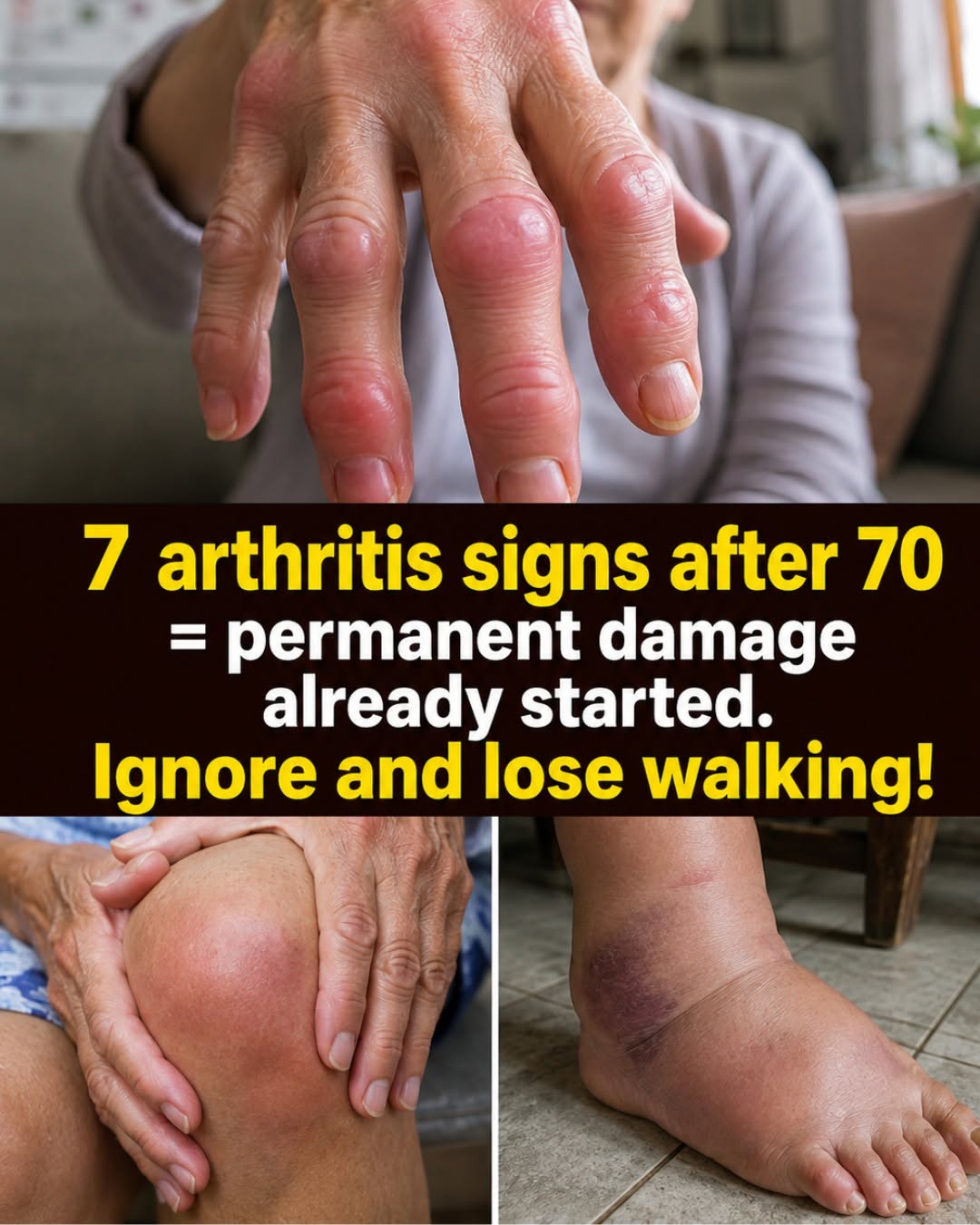
Then comes the second warning: swelling that makes the joint look and feel swollen, hot, and angry. That puffiness is not decoration. It’s the body flooding the area with inflammatory fluid, and that pressure starts crowding out comfortable movement.
So you sit at the breakfast table, staring at a spoon, already negotiating with your own hands before the day has even begun. That tiny battle repeats until it feels normal — and that’s exactly how damage keeps advancing unnoticed.
Why the knees and feet often scream first
The knees carry the load of every step, every stair, every awkward turn in the kitchen. When arthritis digs in there, the joint stops acting like a shock absorber and starts acting like a cracked wheel bearing.
One wrong pivot by the sofa and you feel it: a stab, a catch, a deep ache that lingers. Later, the stairs become a calculation. By the time you reach the top, the joint feels thick, heavy, and unreliable.
The feet tell their own story. A swollen ankle, a burning ball of the foot, toes that don’t want to bend — those are not “little annoyances.” They are the foundation of walking getting sabotaged from below.
When the foundation shifts, the whole house starts to lean. That’s why people begin to shorten their stride without noticing, then avoid walks, then avoid errands, then avoid anything that asks too much of the joints.
Why hands reveal the damage before anyone else sees it
Hands are the loudest tattletales in arthritis. Knuckles thicken, grip weakens, jars become enemies, and buttons turn into tiny acts of war.
It’s like trying to run a machine with gears packed in sticky sludge. The gears are still there, but they no longer mesh cleanly, so every task takes more effort and leaves more strain behind.
