
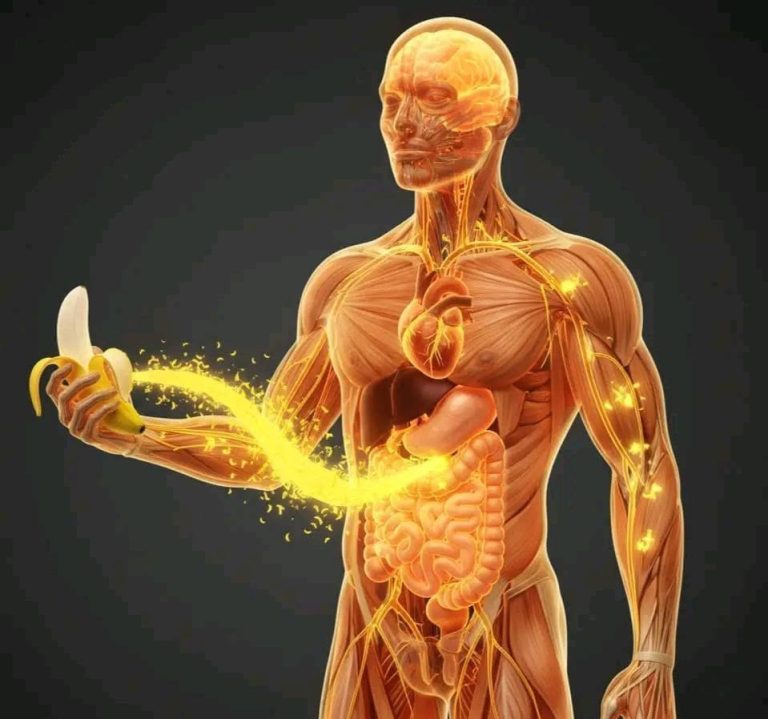
Bananas provide dietary fiber, and their starch composition varies depending on how ripe they are.
Fiber contributes to normal digestive health.
But individual tolerance matters.
Some people find bananas easy to digest, while others may experience bloating or digestive discomfort.
And if you have acid reflux or another condition aggravated by eating close to bedtime, having any snack immediately before lying down may not be ideal.
Listen to how your own body responds rather than assuming one bedtime rule applies to everyone.
Will Eating a Banana at Night Make You Gain Weight?
Not automatically.
Body weight isn’t determined by whether one particular food is eaten after a certain hour.
Your overall energy intake, diet, activity, sleep, and other factors matter much more.
A banana contains calories, so those calories still count.
But replacing a large dessert or highly processed evening snack with a reasonable portion of fruit can be a practical dietary choice for many people.
The important question isn’t simply:
“Did I eat this after 8 p.m.?”
It’s:
“How does this food fit into my overall diet?”
What About the Natural Sugar in Bananas?
Bananas contain naturally occurring sugars and carbohydrates.
That doesn’t make them equivalent to candy or soda because whole bananas also provide fiber, vitamins, minerals, and other components of whole fruit.
Still, people who need to carefully manage their carbohydrate or potassium intake may need individualized guidance.
For example, people with kidney disease can sometimes develop dangerously high potassium levels and may be advised to limit certain potassium-rich foods. NIH specifically advises people with kidney disease or those taking certain medications to discuss potassium intake with their healthcare provider.
People managing diabetes may also need to consider portion size and total carbohydrate intake.
Green vs. Ripe Bananas: Is There a Difference?
Yes.
As bananas ripen, their carbohydrate composition changes.
Less-ripe bananas generally contain more resistant starch, while ripening converts more starch into sugars.
That’s why a very ripe banana tastes considerably sweeter than a green one.
Neither is automatically “good” or “bad.”
Which one you prefer can depend on taste, digestion, and individual nutritional needs.
When Is the Best Time to Eat a Banana?
There’s no universally perfect time.
You can eat bananas:
