
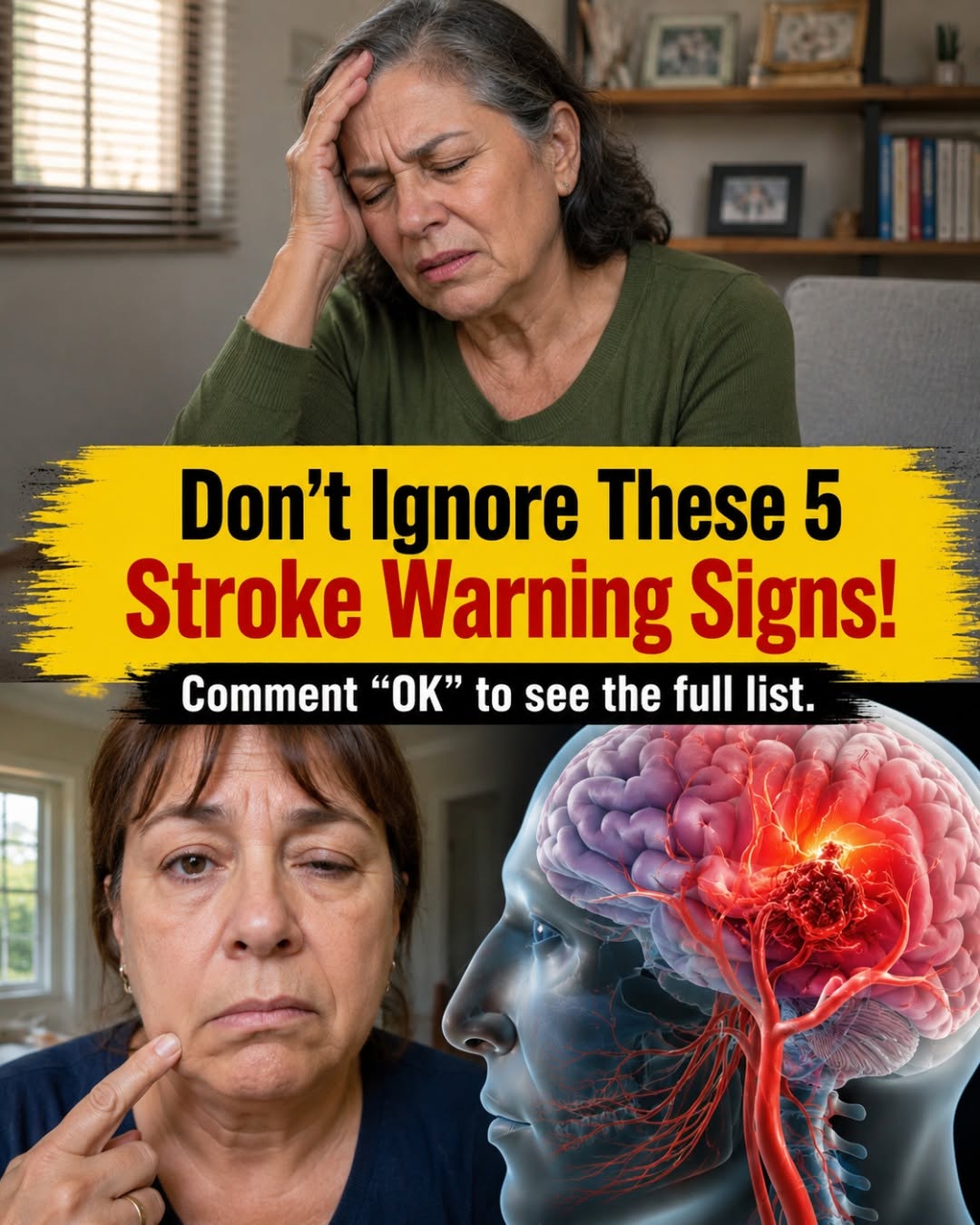
Stroke does not always arrive like a thunderclap. Sometimes it starts as a numb arm, a crooked smile, a mouth that suddenly won’t shape words, a curtain of blur over one eye, or a headache that feels like pressure building behind the skull.
That is the danger: the body rarely screams all at once. It leaks clues first, and those clues are exactly what people brush off while they “wait and see.”
In the post, the warning signs are clear: one-sided weakness or facial droop, slurred speech, sudden vision loss, dizziness with loss of balance, and a severe unexplained headache. That is not random discomfort. That is the brain begging for oxygen while a vessel is narrowing, clogging, or bursting.
One side of the body goes quiet while the other side still works, and people call it fatigue.
When the signal starts in the arm, face, or mouth
The first place stroke often shows itself is the face and limbs. A hand won’t grip the coffee mug. A smile looks lopsided in the mirror. A sentence comes out twisted, like the tongue forgot the wiring.
Think of the brain like a control room with dead wires running to specific doors. When one artery gets blocked, the door it feeds starts failing first, and the failure shows up on one side only. That is why a drooping mouth or a useless arm is not “just being off” — it is a power outage in progress.
By the time someone notices the spoon slipping from their fingers, the body has already been fighting for circulation. The ugly contrast is brutal: with steady blood flow, movement is clean and automatic; without it, the muscle becomes a puppet with cut strings.
The $100-billion health machine loves complexity, but the body often collapses over something far simpler: blood that cannot move.
Why speech and vision go first in some people
When speech turns thick or words vanish halfway out, the brain is losing its grip on language centers. It feels like trying to make a call with a dead battery — you know what you want to say, but the signal keeps breaking apart.
Sudden blurred vision or double vision is just as serious. One moment the room looks normal; the next, the edges smear, the lights flare, and one eye acts like a camera lens covered in grease.
That is the hidden violence of poor circulation in the brain. A small clot does not need to be massive to cause chaos; it only needs to land in the wrong lane and starve the right tissue.
After that, the day changes fast. Reading becomes a chore, driving feels unsafe, and even a hallway can seem to tilt under your feet. The person standing there may look “fine” to everyone else while their nervous system is unraveling in real time.
And that is why nobody told you to dismiss these signs: they do not look dramatic until the damage is already moving.
The balance system is usually the next place to crack
Dizziness with stumbling is not always an ear problem. Sometimes it is the brain’s balance center losing its fuel supply, like a ship’s navigation system flickering in a storm.
